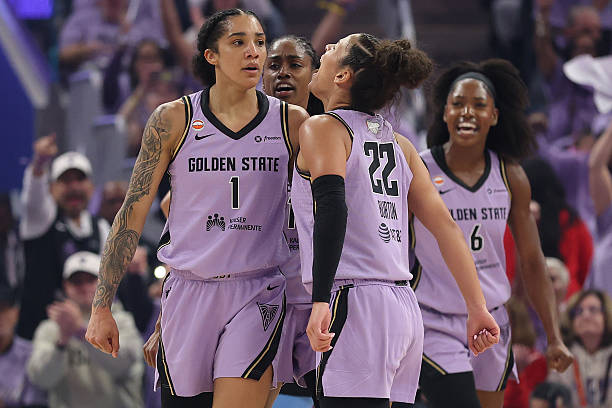
The Atlanta Dream have proven through the first stretch of the season that they can battle back from almost anything. Double digit deficits, late game pressure and fourth quarter battles have not stopped Atlanta from finding ways to win games early this season, but repeatedly falling behind early is beginning to emerge as an area of concern.
The Dream once again found themselves trailing early in their matchup against the Minnesota Lynx last night, continuing a trend that has followed the team through several games this season. In their first matchup against Minnesota on May 9, Atlanta erased a 19-point deficit to secure a one-point win. During the Dream’s home opener at State Farm Arena against the defending champion Las Vegas Aces on May 17, Atlanta trailed by as many as 19 points before using a 21-10 fourth quarter to nearly complete the comeback in an 85-84 loss. Against the Phoenix Mercury on May 24, the Dream entered the fourth quarter trailing before outscoring Phoenix 33-23 to secure an 82-80 win.
Through the first six games of the season, Atlanta has consistently relied on late game runs, defensive stops and key moments from stars like Allisha Gray and Jordin Canada to overcome slow starts. Players off the bench, including Australian guard Izzy Borlase, have also delivered important minutes during comeback victories. While the comeback wins have showcased the team’s resilience, relying on late game heroics every night is difficult to sustain over the course of a season.
Basketball is a game of runs, but consistently putting yourself in position where you have to erase large deficits creates pressure on both ends of the floor. Head coach Karl Smesko has often turned to different lineups throughout games in search of energy and momentum shifts. Before the game against Minnesota, Smesko was asked about how the Dream could avoid another slow start after the Lynx opened the previous matchup on a 24-12 run.
“You know, I don’t know,” Smesko said before the game. “Hopefully we’ll make some shots early, and we’ll be in a good rhythm offensively early, but you know we’ve played some teams that honestly have gotten off to really fast starts, and then you go back and watch tape, and you’re like, ‘that’s just a tough shot, and there’s another tough shot, and then there’s another tough shot, and they’re feeling good right now.’”
Smesko said the focus has been staying composed and continuing to defend during those stretches.
“I just am glad that when it does happen, that we stick with it. We understand we can only play one possession at a time, and the way out of it is just keep defending and getting good shots, and hopefully the game will kind of switch in the other direction.”
Atlanta’s depth has helped keep the team competitive during those stretches, but the concern is less about one individual game and more about the long-term impact of constantly needing to recover from early deficits. The Dream are also continuing to adjust without All-Star center Bri Jones, who has been sidelined since late April following right knee surgery. Her timeline for return remains uncertain. In Jones’ absence, Angel Reese has shifted into the center position while Naz Hillmon has started at forward.
Throughout training camp and preseason, Smesko emphasized building the team’s defensive identity, something that has helped fuel several comeback victories this season. The challenge now is finding a way to establish rhythm earlier in games and avoid playing from behind so often.
Hillmon addressed that issue last week after practice, saying the team has to become more aggressive from the opening tip.
“Yeah, I think the biggest thing is just like putting our feet on the gas early,” Hillmon said. “I think sometimes we try to kind of feel the game out a little bit. Sometimes you just don’t have the opportunity, especially with the better teams in our league.”
Hillmon added that Atlanta must become the team dictating the pace instead of responding to it.
“Making sure that we’re not really feeling out the game, but punching first essentially, and make sure we don’t have to crawl out of those deep deficits.”
Following the loss to Minnesota, Hillmon acknowledged the physical and mental toll that repeated comeback attempts can create.
“You don’t ever want to get down early,” Hillmon said. “It does take a lot out of you, because you’re having to claw back, and you feel like you have to make sure that every possession is perfect.”
Hillmon said while comeback victories can be exciting, the Dream know they need to establish themselves earlier in games moving forward.
“We’re definitely trying to get to that point where we’re the team that is putting teams away early and not having to fight back for the win.”
Atlanta now turns its attention to its next matchup against the Portland Fire at 10 p.m. EST on tomorrow. Portland, an expansion team, is led by Carla Leite and Bridget Carleton. Former Dream guard Holly Winterburn is also on the roster on a developmental contract after being released before the start of the season.
As the season progresses, Atlanta’s resilience has already become clear. The next step for the Dream may simply be finding a way to stop putting themselves in comeback situations in the first place.
Related
Discover more from KB Sports Media
Subscribe to get the latest posts sent to your email.