The Toronto Tempo never saw their full roster in their inaugural season. At exit interviews, the players and staff kept coming back to the same question.
Laura Juškaitė did not need long to sum up the first season in Toronto Tempo history.
“This season will always be the ‘what if’ season,” the Lithuanian forward said during her exit interview, “because we don’t know what would have happened with everyone healthy.”
It was a fitting line for a franchise that spent its first-year building around players it rarely had on the floor at the same time. The Tempo finished 11-33, endured a 12-game losing streak and missed the playoffs. They closed the season with eight straight losses on a short-handed roster and left more questions than answers about what this group could become at full strength. But inside the locker room and across the country, the inaugural season meant something the standings cannot fully capture.
Head coach Sandy Brondello, who called this one of the hardest years of her career as a player or coach, would not single out a defining moment. She said it would be unfair to pick one, because the Tempo never had their full group together.
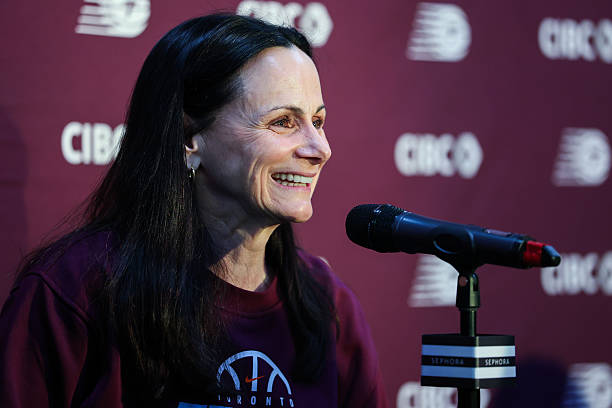
“It’s a ‘what if,'” Brondello said. “What would it look like with Nyara and Izzy and Slim and Marina and everyone available at the same time?”
The injuries reached every corner of the roster. Brittney Sykes, one of the franchise’s top free-agent signings, spent much of the season sidelined. Marina Mabrey and Kiki Rice both missed stretches. The post rotation was hit hard enough that Brondello pointed to it directly when discussing the team’s defensive struggles. By the final week, Julie Allemand said, the Tempo were playing with seven or eight available players.
“I don’t even know if we had one game with the full roster,” Allemand said. “That’s unbelievable. Imagine if we’d had the full roster. I think it would have been so different.”
Nyara Sabally, one of the few players under contract selected in the expansion draft, put it plainly. The season was “plagued with injuries,” she said, “so it’s hard to tell where we really stood.”
The glimpses that did come were telling. General manager Monica Wright Rogers pointed to the early pairing of Sykes and Mabrey, “for the limited games we had them,” as “very telling of what this team is capable of.” Mabrey, for her part, delivered the signature individual performance of the season, a 53-point game that Juškaitė named as her highlight of the year. Mabrey called it one of the best nights of her basketball career.

If the injuries took something from the Tempo, they also handed opportunities to players who were ready for them.
Isabelle Harrison came to Toronto because Brondello told her she would have a bigger opportunity here than in New York. The injuries made that promise bigger still. “It was unfortunate to have all those injuries,” Harrison said, “but I was able to step into a bigger role and do something for the team.”
Juškaitė arrived as a 28-year-old rookie unsure she would make the roster. She finished as a starter who played every game, shifting positions as the lineup changed around her. “I’m the one who gets pushed to one position or another depending on injuries, matchups or whatever is happening on the court,” she said. “The minutes I played and the positions I had meant overall improvement for me.”
María Conde, in her first WNBA season after years in Europe, said her proudest accomplishment was adapting quickly to whatever the team needed, including defending opponents’ top scorers. Rookie Teonni Key said the injuries gave her “a lot of opportunities,” and the coaching staff kept her confident enough to take them.
The clearest example may be Rice, the sixth overall pick. She missed almost two months with her own injury, then returned to a larger role with the stars sidelined. Brondello said Rice averaged nearly 16 points a game as a starter the rest of the way. “That’s when you can see how good she can be,” Brondello said. Rice called the injury and the comeback the moment that defined her rookie year.
What the Tempo did hold onto was each other.
Sykes, who spent much of the year watching from the bench, pointed to a moment in the locker room just before the FIBA break, after a loss to Phoenix. Players were about to scatter, some to Berlin for the World Cup and some home to reset. Instead of splintering, they rallied.
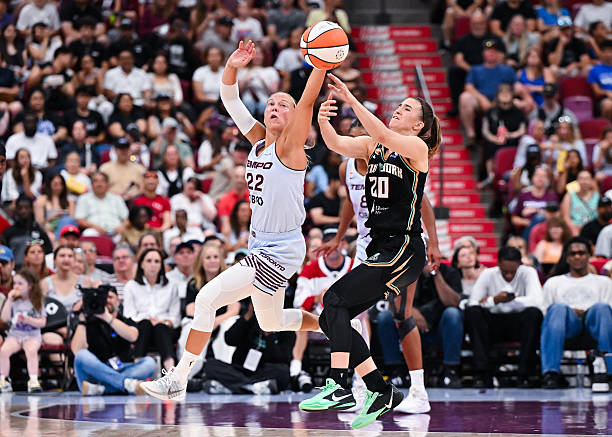
“As long as we’ve got each other in this room, nothing else matters,” Sykes recalled them telling one another. “We are all we have, and we’re going to finish this season with our heads held high, no matter the wins or losses.”
“It’s not my first losing season if you’re looking at records,” Sykes added, “but I think we won a lot this season in morale and in sticking together.”
Brondello said the same. “We still came together and enjoyed each other,” she said, “and I’m proud of that.”
The support around them never wavered either. Players described sold-out crowds at Coca-Cola Coliseum, a WNBA regular season record crowd of 20,996 in Montreal, strong support in Vancouver, and fans who cheered as loudly in defeat as in victory. “You’d never know if we lost the way the fans cheered,” Sykes said. Kia Nurse, the Canadian veteran who spent the year playing at home, said she was most proud of “how Canada truly embraced this team.”
Now the Tempo turn to the question that matters more than “what if”: what next.
The blueprint is consistent from the front office to the locker room. Get healthy. Improve a defense that Wright Rogers acknowledged ranked last in the league. Add rim protection and players who fit the system the coaches want to run. Use what the organization hopes will be a high draft pick on someone to build around for years.


Allemand said the rest comes down to culture. “We need to be tougher,” she said. “I know we have talent. We can play defense, we can play offense, we have amazing players. So it’s more about fundamentals for me.”
Sabally warned against expecting a quick fix. “You don’t want one good season,” she said. “You want to build a dynasty, and that’s a longer process.”
Nurse, who has played on championship-level teams in college and the pros, sees a foundation that no longer has to be built from scratch. “Literally everything was brand new,” she said, “and next year it won’t be.”
The Tempo will spend the offseason scattered across Unrivaled, Europe and Australia. When they return, they will carry one full season of answers into year two. The biggest one, what this team looks like whole, is still waiting.
Discover more from KB Sports Media
Subscribe to get the latest posts sent to your email.